How Housing Damping Shapes Gearbox Radiated Noise
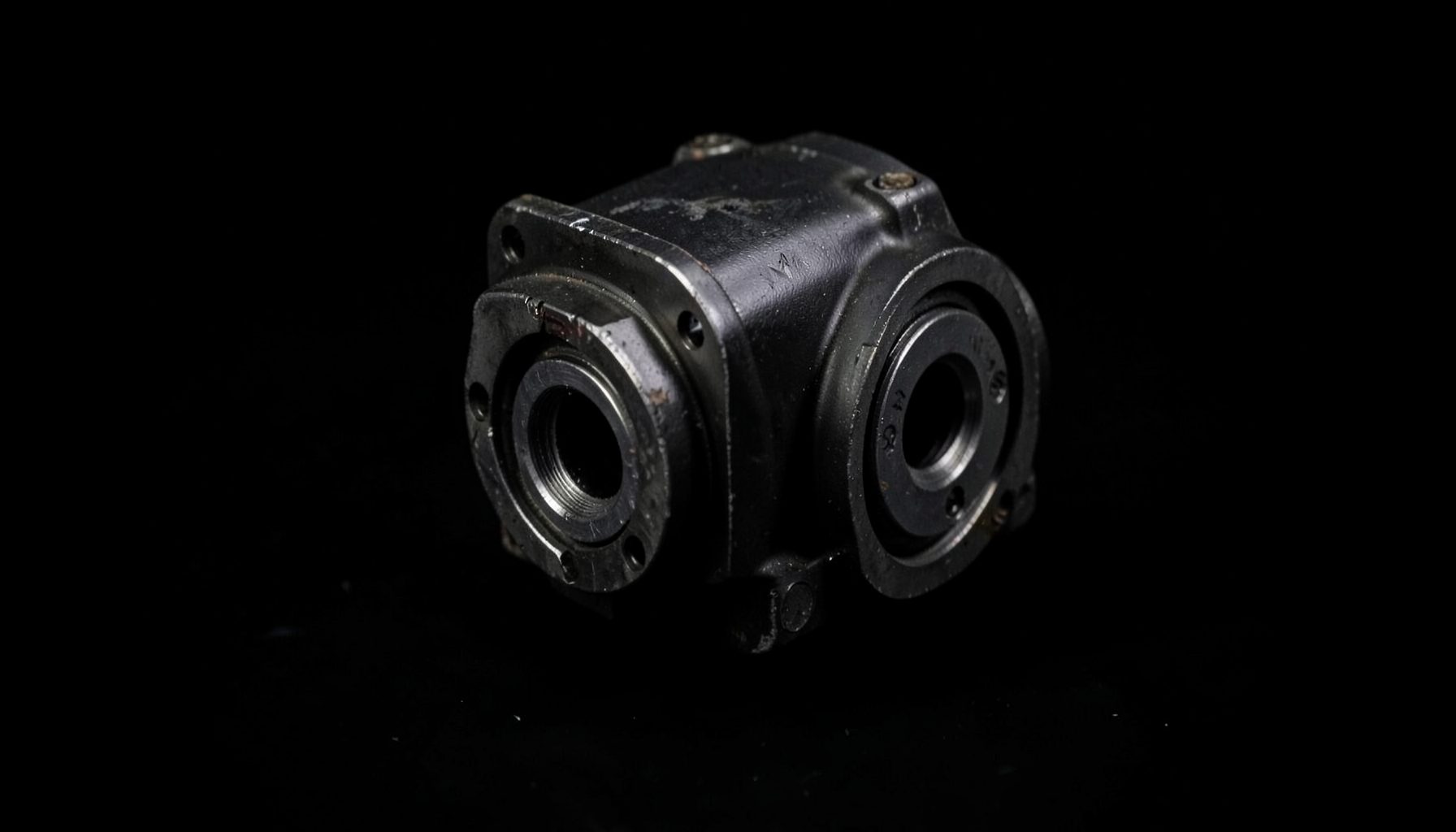
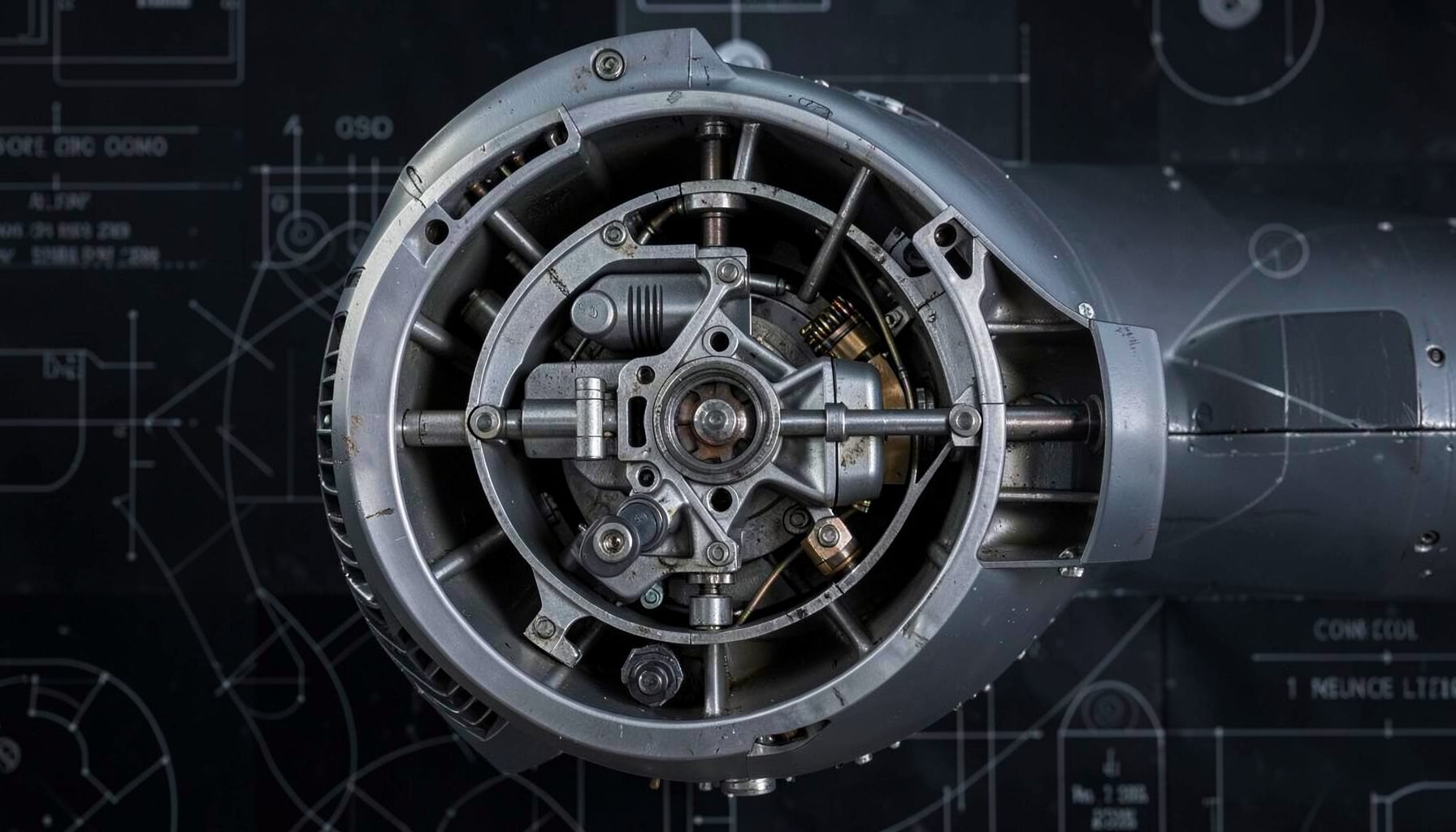
A geared aircraft engine transfers power through a compact transmission operating at high rotational speed, substantial torque and tightly controlled clearances. Its housing must contain the gears, bearings and lubricant while maintaining alignment under changing loads. At the same time, the casing becomes an acoustic radiator: vibration generated inside the gearbox can travel through its walls and emerge as tonal noise.
The material used for that housing influences this process through stiffness, density, internal damping and manufacturing behaviour. Aluminium alloys are attractive for low mass and heat transfer, while magnesium and titanium may offer different weight, strength or corrosion characteristics. Composite and hybrid constructions can provide greater vibration attenuation, although they introduce joining, thermal and certification questions.
A study on the effect of housing material damping on gearbox radiated noise therefore needs to examine more than a single damping coefficient. The important relationship runs from gear-mesh excitation to bearing and shaft response, housing mode shapes, panel vibration and sound pressure in the surrounding air. Small changes in geometry, joints, lubricant temperature or production tolerances can alter the measured result.
This subject has practical relevance in Australia, where aircraft may operate from dense urban airports in Sydney, Melbourne and Brisbane, as well as remote airfields supporting mining, medical transport and regional communities. A quieter powerplant can improve passenger comfort, reduce disturbance around airports and help manufacturers meet customer expectations in a market where reliability and maintainability remain decisive.
Why Housing Material Matters
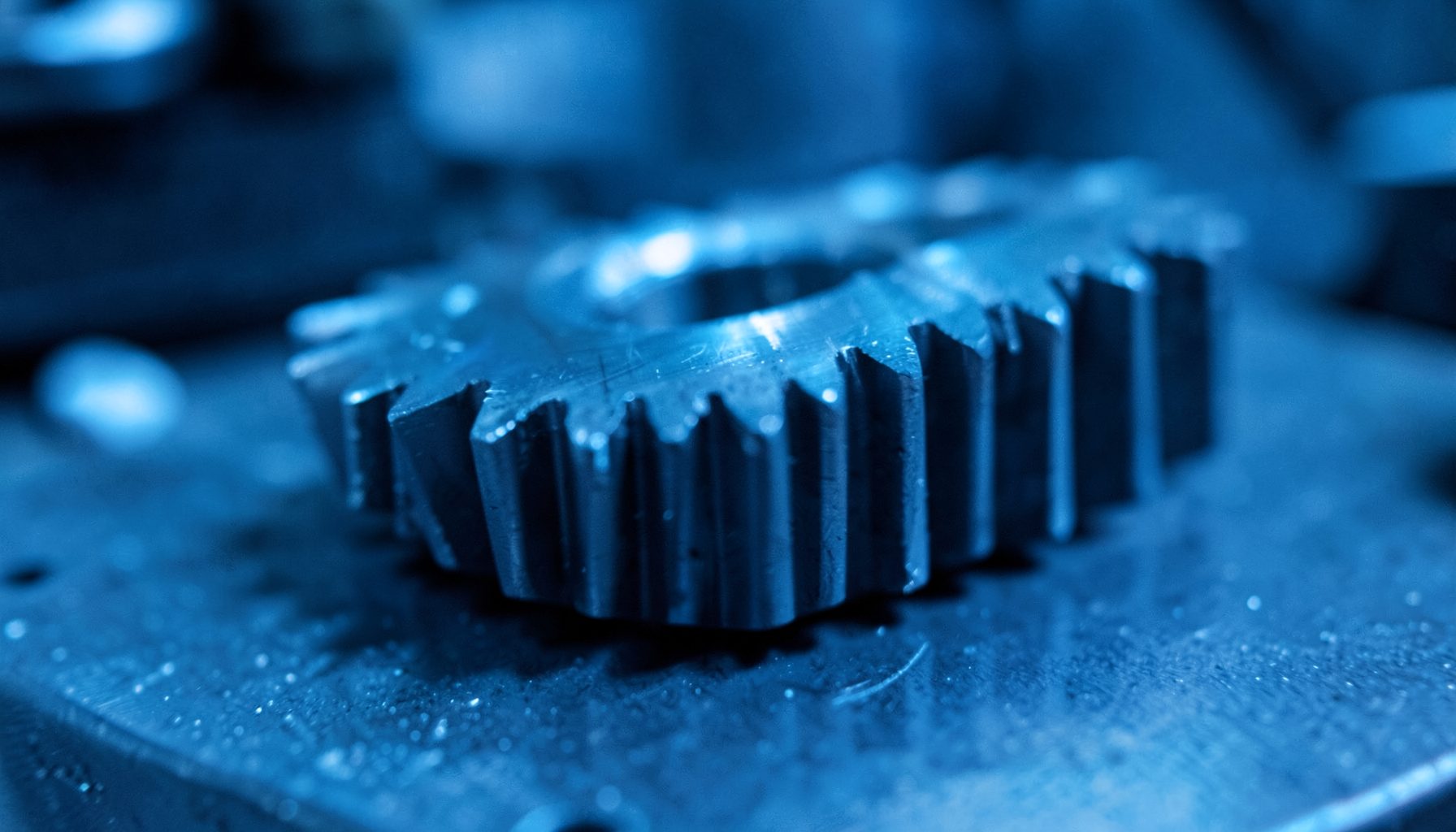
Gear teeth generate periodic forces when they enter and leave mesh. Transmission error, tooth stiffness variation, runout and load distribution produce excitation at the gear-mesh frequency and its harmonics. Bearings add their own forces, while shafts and couplings transmit torsional and lateral disturbances into the casing. The housing receives this energy at bearing seats, mounting lugs and structural interfaces.
Once excited, the casing behaves as a complex dynamic structure. Its natural frequencies depend on elastic modulus, density, wall thickness, ribs, fasteners and boundary conditions. Its damping determines how sharply it responds near resonance and how quickly vibrational energy decays. A lightly damped housing may produce high narrow-band sound pressure, while a more heavily damped design can spread and reduce the response.
Material damping is often expressed through a loss factor, damping ratio or modal loss factor. These values are useful, but they are not universal material constants in the simple sense. They can change with frequency, temperature, stress amplitude, surface treatment, casting quality and joint pressure. A value measured on a small coupon may therefore misrepresent the behaviour of a ribbed gearbox casing with bolted covers and bearing loads.
The acoustic outcome also depends on radiation efficiency. A large, thin panel vibrating near an efficient acoustic mode may radiate strongly, whereas a smaller or irregular panel may convert the same structural vibration into less airborne sound. Housing material selection must therefore be assessed alongside geometry and support conditions rather than treated as an isolated substitution exercise.
Building A Reliable Simulation Model
A useful investigation begins with a finite element model of the gearbox housing, covers, bearing supports and principal attachments. The model should represent mass and stiffness accurately, including local ribs, fillets, access covers, seals and fasteners. Simplifying these features may be acceptable during concept screening, but final predictions require attention to the areas where vibration enters and leaves the casing.
The gear train can be represented with measured or calculated excitation forces. A detailed multibody or gear-dynamics model may predict time-varying bearing reactions, while a reduced model can apply harmonic loads at the bearing locations. Transmission error is especially important because it links tooth contact behaviour to tonal forcing. Researchers can also use a design-of-experiments strategy to identify which parameters deserve detailed modelling; the project’s work on Taguchi screening methods provides a relevant example of this approach.
Structural modal analysis should be followed by forced-response analysis over the operating speed range. The study can then compare housing materials using equal geometry, equal mass, or equal structural performance, depending on the engineering question. Equal geometry isolates the effect of material properties. Equal mass reveals the trade-off between damping and thickness. Equal stiffness shows whether a material can suppress noise without sacrificing alignment stability.
The acoustic model may use a boundary element method, finite element acoustic domain or validated near-field measurements. It should predict sound power and sound pressure at realistic observer positions. In aircraft applications, both internal cabin noise and external airframe or ground noise may matter, so the model boundary must reflect the intended installation rather than an unsupported laboratory casing.
Measuring Damping Under Operating Conditions
Material coupons provide an initial estimate of damping, but component-level testing is essential. Impact hammer tests, shaker excitation and operational modal analysis can identify natural frequencies, mode shapes and damping ratios. The housing should be tested with covers, bearings, fasteners and representative lubricant conditions because interfaces often dissipate more energy than the base material itself.
A well-designed test programme compares a baseline casing with alternative materials or treatments while keeping gear excitation consistent. Accelerometers can be mounted at bearing supports, panel centres and attachment points. Laser Doppler vibrometry is useful for mapping large surfaces without adding sensor mass. Microphones positioned in a semi-anechoic environment can capture radiated sound, while order tracking separates gear-mesh tones from broadband mechanical noise.
Temperature deserves particular attention. An aircraft gearbox can experience cold-soak conditions at altitude, rapid heating during climb and sustained thermal exposure during cruise. Damping may increase or decrease across this range, and lubricant viscosity can change the force transmitted into the housing. In Australia, testing may also need to account for hot ground operations in places such as Darwin or inland Western Australia, where equipment can begin a flight at high ambient temperature.
The results should be reported using repeatable metrics: overall A-weighted sound pressure, sound power level, gear-mesh tone amplitude, vibration velocity at key panels and modal damping by frequency band. A single peak value can hide important behaviour. Two materials may produce similar overall noise, for example, while one reduces an objectionable tonal peak and the other simply lowers unrelated broadband content.
Balancing Weight, Stiffness and Noise
A higher-damping material is not automatically the best aerospace choice. If it is less stiff, the housing may require thicker walls or additional ribs to preserve bearing alignment. That added mass can reduce the benefit of acoustic treatment and affect the engine’s power-to-weight ratio. If it conducts heat poorly, the gearbox may need larger cooling provisions or a revised lubrication system.
Aluminium remains attractive for many gearbox housings because it combines low density, machinability and useful thermal conductivity. Its intrinsic damping may be modest, so designers often rely on geometry, constrained interfaces or local treatments to control vibration. Magnesium can reduce mass further but brings corrosion protection, flammability management and joining considerations. Titanium offers high strength and temperature capability, though its density, cost and manufacturing burden can be significant.
Hybrid housings may place a stiff metallic frame around bearing locations and use a damped cover or constrained-layer panel in regions with high acoustic radiation. Such a solution must retain load paths, inspectability and environmental durability. The web taper approach illustrates the broader principle: material should be placed where it contributes most to performance, rather than distributed uniformly.
Australian operators also value rapid maintenance in regional settings, where specialist facilities may be far away. A housing concept that performs well acoustically but requires complex repair tooling may be less suitable for aircraft serving remote Queensland, the Northern Territory or Western Australia. The local aerospace supply chain, access to certified materials and the availability of qualified repair personnel should be included in the design assessment.
Connecting Noise Results With Design Decisions
The most useful study combines experimental data with sensitivity analysis. Candidate variables may include housing loss factor, elastic modulus, density, wall thickness, rib layout, bearing-seat stiffness, cover preload and gear-mesh excitation level. A response surface or surrogate model can then show which combinations reduce radiated noise without causing unacceptable mass, temperature or stress penalties.
Tolerance analysis is important because real housings vary. Casting porosity, machining tolerances, fastener torque, surface finish and joint gaps can change modal behaviour. Gear microgeometry and bearing clearance also vary within specified limits, altering the force spectrum before it reaches the casing. A robust design should perform acceptably across these manufacturing and operating distributions rather than relying on a nominal simulation.
One useful strategy is to identify whether noise is controlled by material damping or by resonance placement. If a housing mode sits directly on a dominant gear-mesh order, moving the mode through a geometry change may be more effective than selecting a material with a slightly higher loss factor. If several modes contribute across a broad frequency range, damping treatment may offer better control.
The project’s discussion of modifiable slot multipliers can also be read as an example of parameterised engineering exploration. In a gearbox noise study, parameterised models allow designers to vary ribs, wall sections, interfaces or material zones systematically. This supports a repeatable comparison rather than a sequence of isolated redesigns.
Validation For Australian Aerospace Use
Validation should progress from material coupons to subcomponents, then to a complete gearbox on a representative test rig. The rig needs realistic shaft speed, torque, lubrication flow, bearing preload and mounting stiffness. Measurements should be repeated across the operating envelope, including transient acceleration and deceleration where gear-mesh orders pass through structural resonances.
Noise criteria depend on the aircraft and operating environment. Cabin comfort may be assessed through interior sound pressure and tonal prominence, while airport or community effects may require external sound power and directivity data. Australian requirements can involve the Civil Aviation Safety Regulations administered by CASA, applicable aircraft noise certification frameworks and state or territory environmental noise rules. These obligations should be checked for the specific aircraft, test location and certification pathway rather than assumed to be identical nationwide.
Work health and safety requirements also influence test facilities. High-speed rotating machinery, acoustic enclosures, hot oil and stored mechanical energy require guarding, interlocks, emergency procedures and documented risk controls under the relevant state or territory WHS framework. A test campaign near Sydney or Melbourne may face different site and community constraints from one conducted at a remote aviation facility, even when the technical measurement method is the same.
The final engineering decision should present a traceable comparison: noise reduction, modal damping, mass change, thermal performance, structural margin, manufacturability, inspection needs and cost. It should state uncertainty and show how the result changes with temperature, production variation and mounting conditions. That evidence gives gearbox designers a defensible basis for selecting a housing material, a hybrid construction or a geometry-led solution.
Reducing radiated noise is most effective when treated as a system problem linking gear accuracy, bearing dynamics, housing design, damping and acoustic radiation. Use validated simulations and controlled tests to identify the dominant paths, then apply material where it delivers measurable benefit. For the OPTIMIZE Project, this approach can help turn quieter gearbox operation into a practical improvement in efficiency, durability, power density and aircraft usability.