

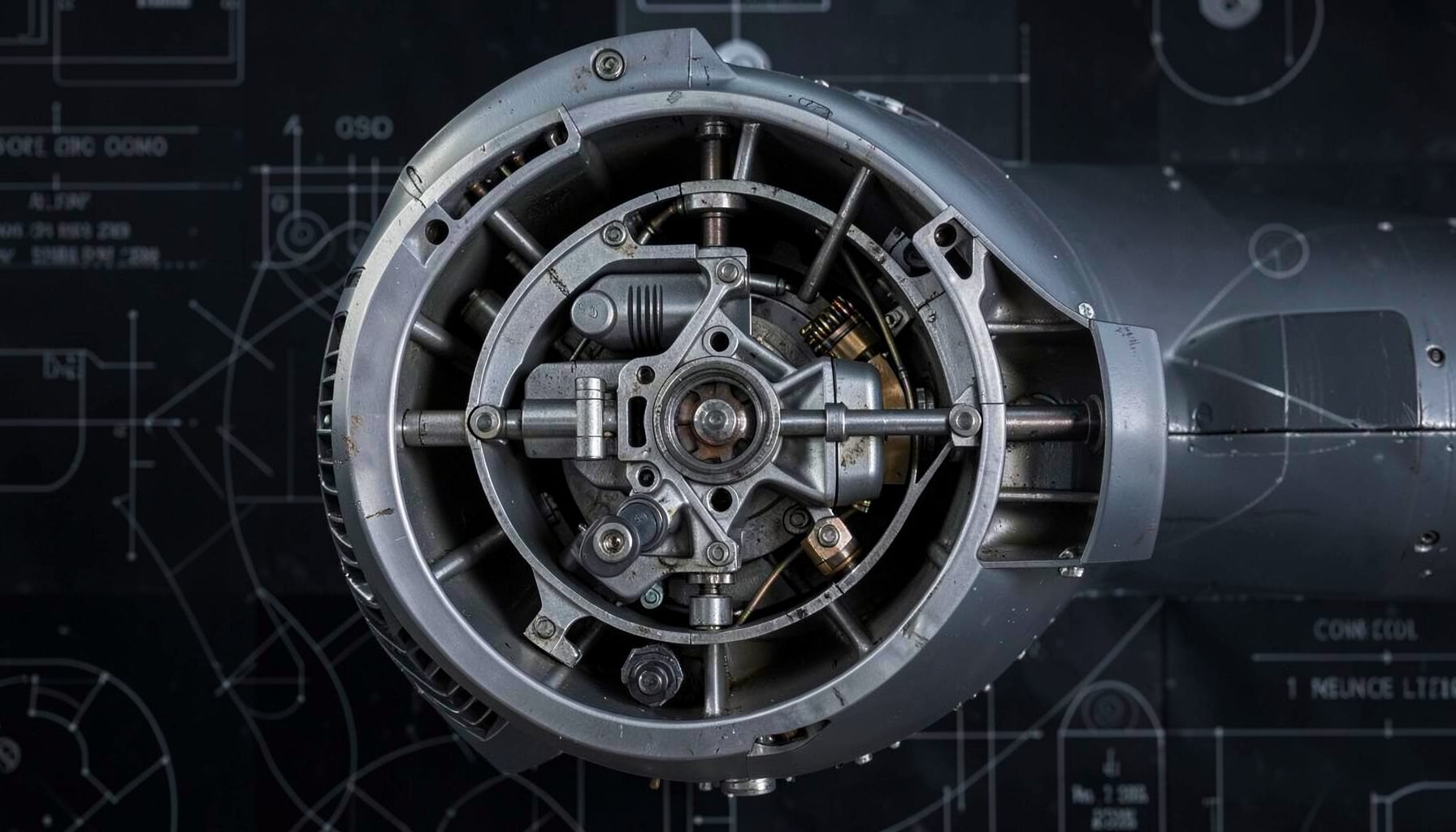
Tuning the Oil Filter Bypass Valve to End Cold-Start Starvation
Cold-start oil starvation remains one of the most stubborn lubrication problems in modern geared aircraft engines. When a powerplant sits on a ramp in sub-zero air and the oil drains away from bearings and gears, the first few seconds after light-up decide whether a hydrodynamic film forms in time or whether metal touches metal. The bypass valve tucked inside the oil filter housing is meant to keep lubricant flowing when the filter element becomes restrictive, yet its factory calibration rarely reflects the wide viscosity swings seen between a Brisbane winter dawn and a Pilbara summer afternoon.
Within the OPTIMIZE programme, researchers have focused on the interplay between filter restriction, bypass cracking pressure and the rheology of multigrade oils at low temperatures. By treating the valve setting as a design variable rather than a fixed component, engineers can push power density higher without sacrificing bearing durability at the moment an engine is most vulnerable.
Why cold-start starvation happens in geared turbofans
In a planetary gearbox running at shaft speeds above ten thousand revolutions per minute, every bearing and gear tooth depends on a continuous wedge of pressurised oil. During a cold start the lubricant behaves almost like syrup, and the pump must work harder to push it through the filter media, the scavenge lines and the tight clearances of a star-arrangement reduction stage. If the pump cannot maintain the minimum pressure demanded by the bearing chambers before the oil warms and viscosity drops, components slip into boundary lubrication.
The phenomenon is familiar to line maintenance crews at Australian carriers. A Qantas engineer taxiing an A320 family aircraft out of Melbourne's Tullamarine on a July morning will see oil-pressure gauges climb sluggishly compared with a Sydney turn-around in midsummer. The same airframe, the same oil grade, yet very different pump-to-bearing behaviour for the first fifteen seconds of operation. Cold-soak conditions amplify the issue, because residual oil that has drained into the sump is then drawn straight through the pump and into a partially blocked filter, where the pressure differential rises sharply.
The role of the bypass valve in lubrication circuits
The bypass valve is a pressure-relief device that opens when the filter element creates too much restriction. Its purpose is twofold: protect the filter from collapse under high differential pressure, and guarantee oil delivery to the engine when the element is blocked or when cold oil pushes the pressure drop beyond acceptable limits. In geared turbofans the valve typically sits in the filter base and is set to crack at a specific pressure differential chosen by the engine integrator.
When the bypass cracks at the right moment, oil keeps moving through the circuit even if the filter is heavily loaded. When it cracks too early, unfiltered oil reaches bearings and accelerates wear. When it cracks too late, the pump sees a dangerous pressure spike and the bearings see almost no flow at all. The window for correct operation is narrow, and it shifts with oil viscosity, filter age and the thermal state of the gearbox housing. Treating the bypass valve setting as a tunable parameter, rather than a procurement decision, opens the door to meaningful improvements in cold-start resilience and gives engineering teams a handle on a problem that has historically been accepted as an inherent weakness of the lubrication system.
Calibrating cracking pressure for cold-soak viscosity
Calibration starts with a clear picture of how oil viscosity changes with temperature. A typical 5W-30 aviation lubricant can vary by two orders of magnitude between minus thirty degrees Celsius and plus fifty degrees Celsius, which means the pressure needed to push the same volume through the filter element at dawn in Hobart is many times the pressure needed at midday in Cairns. Engineers within OPTIMIZE have mapped these curves for candidate lubricants and matched them against the volumetric flow demand of the gearbox at light-up.
Design-of-experiments methods then sweep the bypass cracking pressure across a sensible range and measure the resulting bearing inlet pressure during simulated cold starts. The optimum tends to sit lower than the original equipment setting, because a lower cracking pressure lets the valve open sooner and bleed filtered oil around the restriction before the pump stalls. The optimum is not the lowest value that works, since an over-eager valve would allow unfiltered oil to reach bearings during normal operation. The sweet spot preserves filtration integrity at cruise while guaranteeing flow when the oil is thickest, and any candidate value can be cross-checked against physical rig data submitted to the project contact desk for joint review.
Balancing filter life and oil flow assurance
Bypass valves are often discussed in isolation, but their setting only matters in the context of filter life. A highly efficient filter element with a tight media grade will extend service intervals, yet it will also reach its pressure-drop limit sooner in cold conditions. Australian operators are particularly conscious of this trade-off, because route networks often combine long sectors across the Indian Ocean with short regional hops, and the filter change interval is tied to both hours and cycles.
A revised bypass valve calibration can buy back some of the margin lost to high-efficiency media. By cracking at a slightly lower pressure differential, the system tolerates a more loaded filter without sacrificing bearing feed, which in turn allows the maintenance programme to push filter replacement intervals further out. The trade-off is monitored continuously through the OPTIMIZE test campaign, where filter restriction is measured alongside bearing pressure, oil temperature and vibration data across dozens of start cycles. The resulting dataset is shared with project participants through the secure members area portal, where calibration curves and test reports sit alongside other deliverables.
Cold-start testing in Australian conditions
Australian conditions offer some of the most punishing cold-start environments encountered anywhere in civil aviation. Perth's Jandakot airfield, where general aviation operators face overnight frost in winter, provides one extreme. Adelaide's Parafield, with its dry continental climate and large diurnal swings, provides another. Even Brisbane, often thought of as warm, delivers enough chill in July to thicken oil and slow pump priming.
Within the OPTIMIZE programme, instrumented test rigs at partner facilities replicate these environments by soaking the gearbox overnight in a temperature-controlled chamber and then commanding a start sequence at minus twenty, minus ten and zero degrees Celsius. The bypass valve setting is varied between runs, and the resulting bearing pressure trace is logged at high sample rates. Researchers pay close attention to the first five seconds after ignition, because this is where the hydrodynamic film either establishes itself or fails to. The data is then used to validate simulation models that can predict behaviour across the full range of Australian operating climates, including the cooler alpine conditions encountered by charter operators flying into Mount Hotham or Thredbo during the ski season.
Tolerance analysis and manufacturing variation
Even the best calibration can be undermined by part-to-part variation. Springs in production bypass valves scatter by several percent around their nominal rate, and the cast or machined valve seat itself shows small but meaningful differences in sealing land width. Without a tolerance analysis these variations are invisible, but in a high-speed gearbox they translate directly into scatter in the pressure at which the valve actually opens.
OPTIMIZE engineers combine Monte Carlo simulation with physical measurement to quantify this scatter. Each candidate bypass valve is run through a series of flow benches that characterise its pressure-drop curve against temperature, and the resulting distribution is folded into the gearbox-level cold-start model. If the spread is too wide, the calibration strategy has to be adjusted, either by tightening component supplier specifications or by moving the nominal cracking pressure further from the failure boundary. This kind of tolerance-aware calibration is a hallmark of the project and feeds directly into the design-for-manufacturing work undertaken with industrial partners across the aerospace supply chain.
Linking bypass valve settings to gearbox efficiency targets
The bypass valve is a small component, but it influences outcomes that matter at the whole-engine level. If cold-start starvation is prevented, bearings survive longer, gears run cleaner and the gearbox can be pushed to higher power densities without a weight penalty. Less obvious gains also appear: a properly calibrated bypass valve reduces pump parasitic load once oil is warm, because the filter element is allowed to operate at its design pressure drop rather than being bypassed unnecessarily.
These gains align neatly with the OPTIMIZE efficiency and durability targets, where every fraction of a percent in mechanical loss translates into fuel burn savings on routes such as Sydney to Singapore or Perth to Johannesburg. Australian operators working under Civil Aviation Safety Authority airworthiness directives pay particular attention to lubrication-related service bulletins, so any improvement that demonstrably extends bearing life draws strong interest from local maintenance organisations. When the bypass valve setting is treated as a degree of freedom in the gearbox design space, it becomes a quiet but consistent contributor to overall propulsion performance, complementing work on gear surface finish, bearing preload and lubricant additive chemistry.
Engineers interested in continuous access to instrumentation notes and shift-test logs will find them published in the 24/7 slots feed, which captures overnight rig activity, calibration revisions and lessons learned from cold-soak trials across the project's partner sites.