Housing Wall Damping For Quieter Aircraft Gearboxes
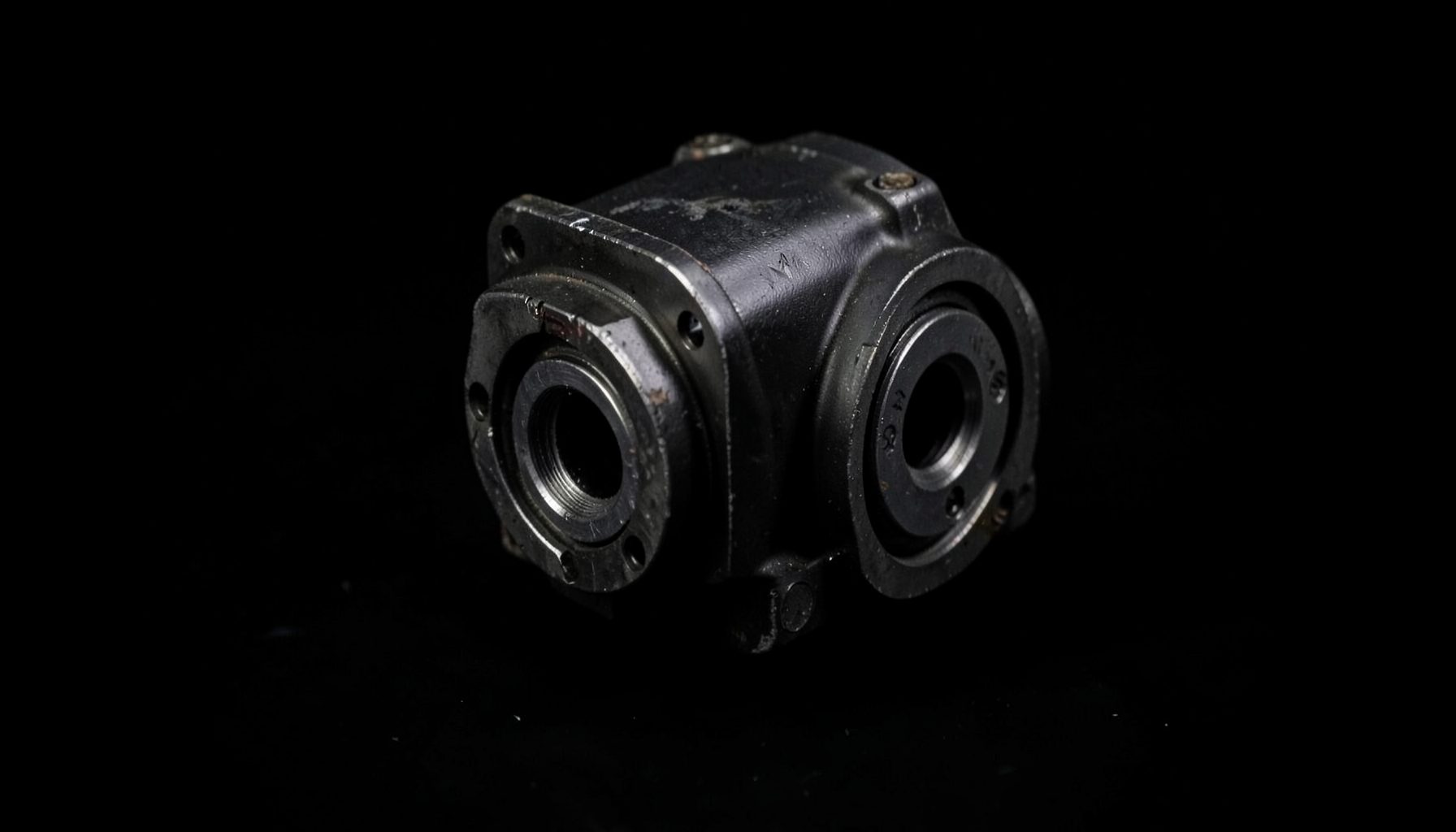
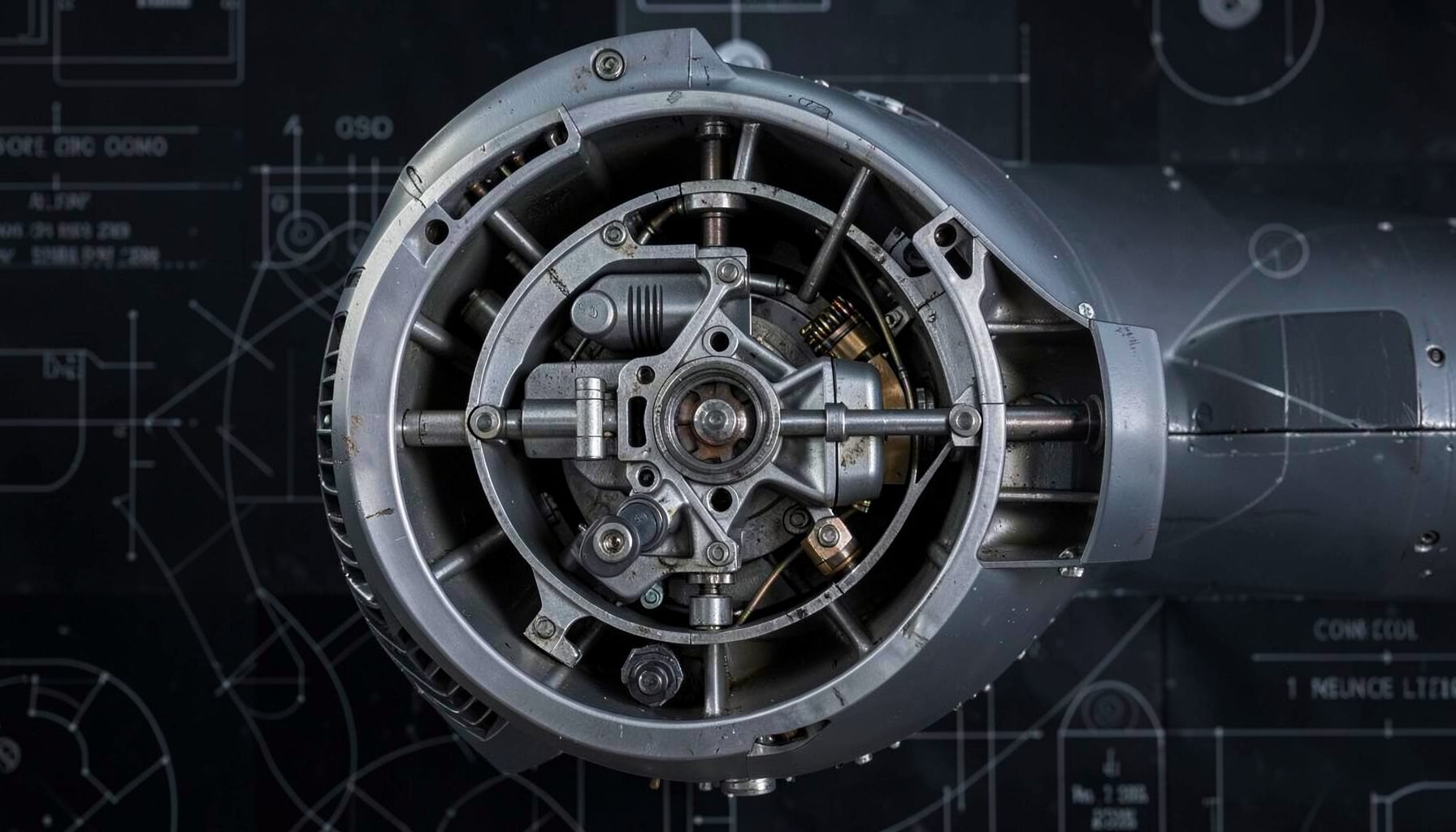
In a geared aircraft engine, the gearbox housing is more than a container for shafts, bearings and lubrication. It is part of the acoustic system. Gear-mesh forces enter the casing through bearing supports and structural joints, excite resonant modes, and radiate sound into the nacelle and surrounding air. A housing that is strong and light can still become an efficient noise source if its panels vibrate readily at important mesh frequencies.
Damping treatments offer a way to control this structure-borne noise without redesigning every gear, bearing or support. Constrained-layer laminates, viscoelastic coatings, tuned inserts and locally reinforced panels can absorb vibrational energy, reducing casing response and radiated noise. For the OPTIMIZE Project, the value of these treatments must be assessed alongside efficiency, mass, durability, manufacturability, lubrication access and the demanding operating conditions of geared propulsion systems.
How Housing Panels Become Noise Radiators
Gear teeth generate periodic transmission-error forces as they enter and leave contact. Even a highly accurate gear pair produces dynamic forces at the gear-mesh frequency and its harmonics. These forces travel through shafts, bearings and bearing seats into the housing. If one of the housing’s natural frequencies sits near a dominant excitation order, the resulting vibration can rise sharply.
Large, thin casing walls are especially sensitive because they can behave like lightly damped plates or shells. Local flexibility around bearing bosses, inspection covers and bolted joints may amplify the response. Once the panel moves, it transfers energy to the air through its surface area. This is why a relatively quiet gear set can still produce a prominent tonal signature when installed in a resonant enclosure.
Housing wall damping treatments reduce the amplitude and persistence of these vibrations. They do not remove the original gear-mesh force, so they should not replace gear microgeometry optimisation, shaft alignment control or bearing design. Their role is to lower the structural response after excitation has entered the casing, particularly where a small amount of added damping can suppress a narrow resonance.
The treatment can also influence vibration transmission between components. A compliant layer may interrupt a direct energy path, while a stiffened patch can shift a mode away from an operating order. The correct choice depends on whether the main problem is a broad-band casing response, a sharp tonal peak, a local panel mode or vibration passing through a housing joint.
Damping Technologies And Their Trade-Offs
Constrained-layer damping uses a viscoelastic material bonded between the housing wall and a relatively stiff outer layer. When the wall bends, the intermediate material is sheared and converts mechanical energy into heat. This arrangement is effective for panel modes, although its performance changes with temperature, frequency, strain level and ageing.
A sprayed or bonded viscoelastic coating can be lighter and easier to apply to curved surfaces. It may suit a development demonstrator or a secondary casing panel, but its bond strength, oil resistance and repair process require careful validation. In an aircraft gearbox, exposure to synthetic lubricant, cleaning fluids, thermal cycling and vibration can alter the material’s properties over time.
Other options include rib modifications, damping shims at covers, friction interfaces, constrained inserts and tuned mass absorbers. A rib can increase stiffness and move a resonance, but it may add more mass than a thin damping layer. A tuned absorber can be highly effective at one frequency yet less useful when speed changes shift the excitation order. Friction damping can perform well across a broader range, though wear and repeatability must be controlled.
The weight penalty must be considered against the acoustic benefit. Adding treatment to every wall may undermine power density and aircraft-level mass targets. A better approach is to identify high-participation areas through modal analysis, then apply material only where strain energy is concentrated. This targeted strategy supports the OPTIMIZE focus on efficient, durable and manufacturable gearbox architectures.
Simulation And Experimental Correlation
A useful workflow begins with a finite element model of the housing, bearings, covers, fasteners and relevant mounting interfaces. The model should represent contact stiffness, joint preload and realistic boundary conditions. A free-free modal model can reveal basic structural behaviour, while an installed model shows how engine mounts and adjacent structures alter the modes.
Damping is often the least certain input. Manufacturers may provide loss factors for a material under laboratory conditions, but the effective value on an aerospace housing depends on bond quality, temperature, geometry and strain distribution. A design-of-experiments approach can vary treatment thickness, coverage, location, material type and attachment method rather than relying on a single assumed value.
Operational response predictions should combine structural modes with gear dynamic loads. The simulation should examine gear-mesh orders over the full speed range, including acceleration, deceleration and transient conditions. It should also consider manufacturing variation, such as housing wall thickness, bearing-seat position, gear eccentricity and joint preload. A treatment that works in the nominal model may lose effectiveness when tolerances shift a resonance.
Physical correlation is essential. Modal testing with impact excitation or a shaker can compare natural frequencies and damping ratios before and after treatment. Operating tests can then measure casing acceleration, sound pressure and order-tracked responses. Laser vibrometry is useful for locating high-response regions without adding sensor mass, while accelerometers provide robust data during rotating tests.
A repeatable evidence trail matters in collaborative engineering projects. Test files, calibration records, material certificates and analysis versions should be stored with access controls and clear revision histories. Basic digital hygiene is important when teams exchange results through online systems; practical account security guidance can reinforce the need to protect credentials and prevent uncontrolled access to sensitive test information.
Validation In Australian Operating Conditions
Australian aerospace engineering often spans very different environments. A gearbox developed with suppliers in Melbourne or Sydney may be evaluated against operating scenarios relevant to hot, dry inland regions, coastal humidity or remote maintenance locations. High ambient temperatures can reduce viscoelastic damping performance, while dust and fluid contamination can challenge exposed bonds and inspection procedures.
The local aviation market also places value on maintainability and reliable support over long distances. An operator in Western Australia or the Northern Territory may not have immediate access to a specialist repair facility. A damping treatment should therefore tolerate approved cleaning processes, allow visual inspection, and avoid creating hidden corrosion traps around fasteners, drain paths or bonded interfaces.
Noise assessment needs to distinguish internal structure-borne vibration from external community noise. Gearbox casing acceleration, nacelle sound pressure and cabin or ground-level measurements answer different questions. Australian workplaces are governed by state and territory work health and safety frameworks, with AS/NZS 1269 commonly used for occupational noise management. These requirements are separate from aircraft certification, yet they influence test-cell planning and worker exposure controls.
For civil and military applications, certification evidence must align with the applicable Civil Aviation Safety Authority requirements and project approval basis. CASA expectations can include traceable design data, environmental qualification, continued-airworthiness information and substantiation of structural integrity. A damping layer cannot be treated as an acoustic accessory if its attachment affects housing strength, heat rejection, inspection or failure containment.
Testing should therefore include thermal cycling, oil exposure, vibration endurance and representative maintenance activities. For aircraft expected to operate from coastal bases, salt-laden air and humidity deserve attention. For aircraft supporting regional routes, transport packaging and field replacement may matter as much as peak laboratory noise reduction.
Building A Focused Development Programme
The most efficient programme separates screening from confirmation. Early testing can identify whether the dominant noise comes from a panel mode, a bearing support, a cover joint or a broader gear dynamic issue. Once the energy path is understood, a smaller number of treatments can be investigated in detail.
A practical selection process should balance acoustic performance with structural and production requirements:
- Map casing mode shapes and strain energy before choosing treatment locations.
- Compare damping, stiffness, mass, oil resistance and temperature capability for each candidate material.
- Test treatment thickness, coverage and bonding process as controlled design variables.
- Include housing, gear, bearing and assembly tolerances in the simulation and test matrix.
- Verify inspection, repair, removal and reapplication procedures under realistic maintenance conditions.
- Record noise reduction alongside fatigue life, thermal behaviour, corrosion risk and manufacturing cost.
The best candidate is rarely the material with the highest datasheet loss factor. A treatment that loses adhesion after thermal cycling or obstructs an inspection port may create a greater programme risk than the noise it removes. Production repeatability is equally important: bond-line thickness, surface preparation and cure conditions can determine whether two nominally identical gearboxes perform alike.
A staged decision gate can prevent premature investment. First, reject concepts that fail compatibility or structural screening. Next, rank surviving options using measured modal damping and casing response. Finally, assess the complete gearbox under operating loads, because a treatment can change local stiffness and shift vibration into another panel or support.
From Prototype Evidence To Production Design
Once a damping concept has demonstrated a reliable reduction in casing vibration, the design team should examine its effect on the complete propulsion system. Lower gearbox noise may expose another source, such as a bearing tone, accessory drive or exhaust-related component. Acoustic treatment is most valuable when integrated with gear microgeometry, housing topology, mount isolation and nacelle design.
The manufacturing route should be defined before final claims are made. For a bonded treatment, this includes surface preparation, primer selection, cure temperature, allowable contamination and non-destructive inspection. For a modified rib or insert, it includes machining tolerances, galvanic compatibility, fastener torque and repair limits. These details determine whether the laboratory result can be reproduced in an Australian supply chain or at an overseas production site.
Digital documentation also needs discipline. Public web pages and commercial content can change without notice, so external references should be archived and labelled by date. Even a page such as Italian casino comparisons illustrates why online material should be treated as versioned content rather than permanent evidence. Engineering decisions should rely on controlled reports, signed test records and traceable source data.
The OPTIMIZE Project’s broader methodology is well suited to this problem because damping is a multi-variable design issue. Simulation can locate the energy path, design of experiments can reveal influential parameters, tolerance analysis can estimate production spread, and physical testing can expose environmental or assembly effects. Together, these methods reduce the chance of solving a laboratory resonance while creating a field reliability problem.
A successful development package should state the measured reduction in vibration and sound, the tested temperature range, the treatment mass, the durability evidence and the acceptance criteria. It should also identify conditions where the treatment is ineffective. Clear limits help operators and maintenance organisations use the gearbox correctly and provide a defensible basis for future certification changes.
Teams developing or validating a geared aircraft gearbox can share technical questions, project information and collaboration requests through the OPTIMIZE contact page. Applying targeted damping, verified modelling and realistic Australian operating assumptions can turn a troublesome casing resonance into a controlled design variable, supporting quieter and more efficient aircraft propulsion.