How Casing Rib Patterns Reduce Gearbox Noise and Vibration
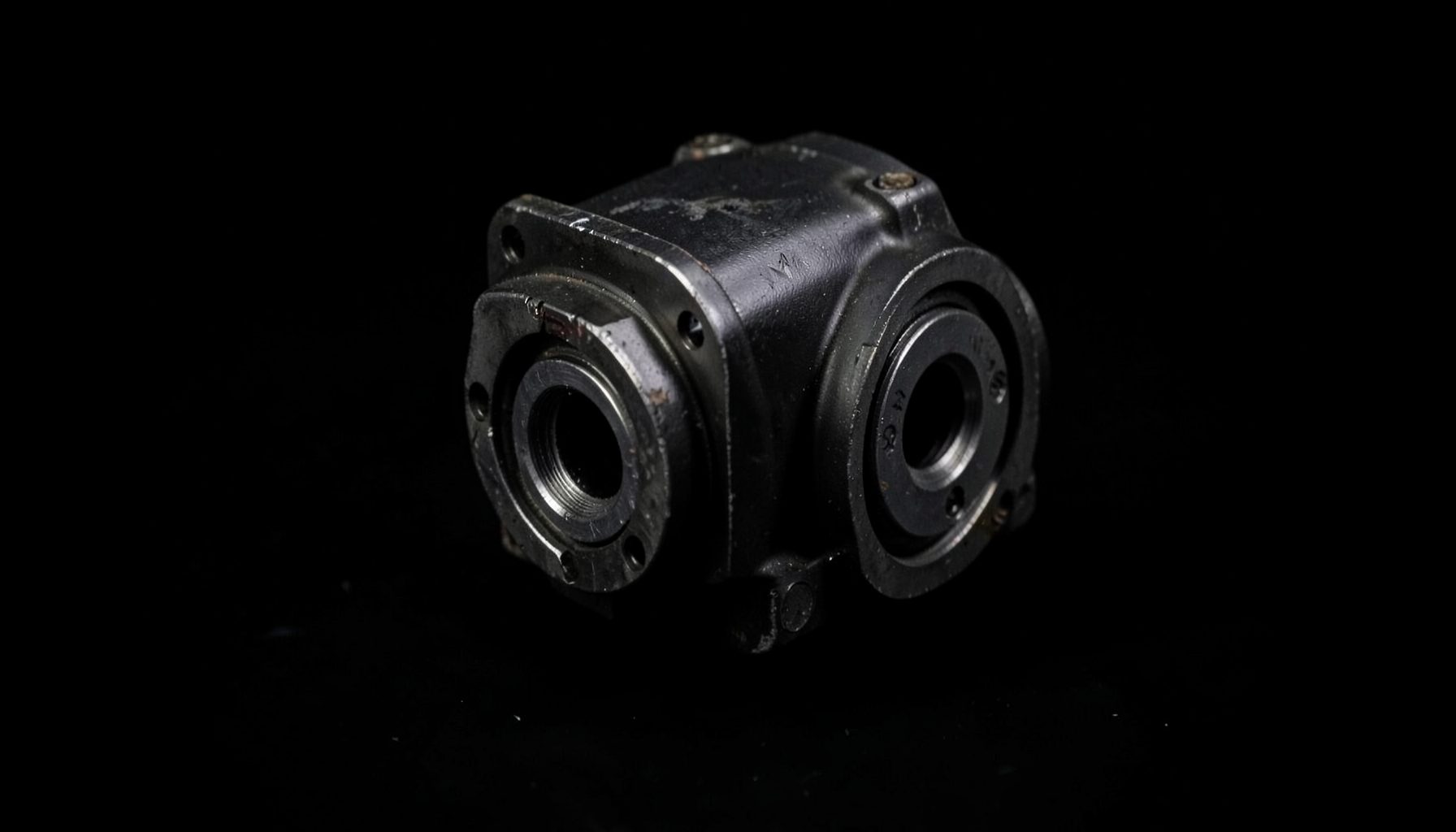
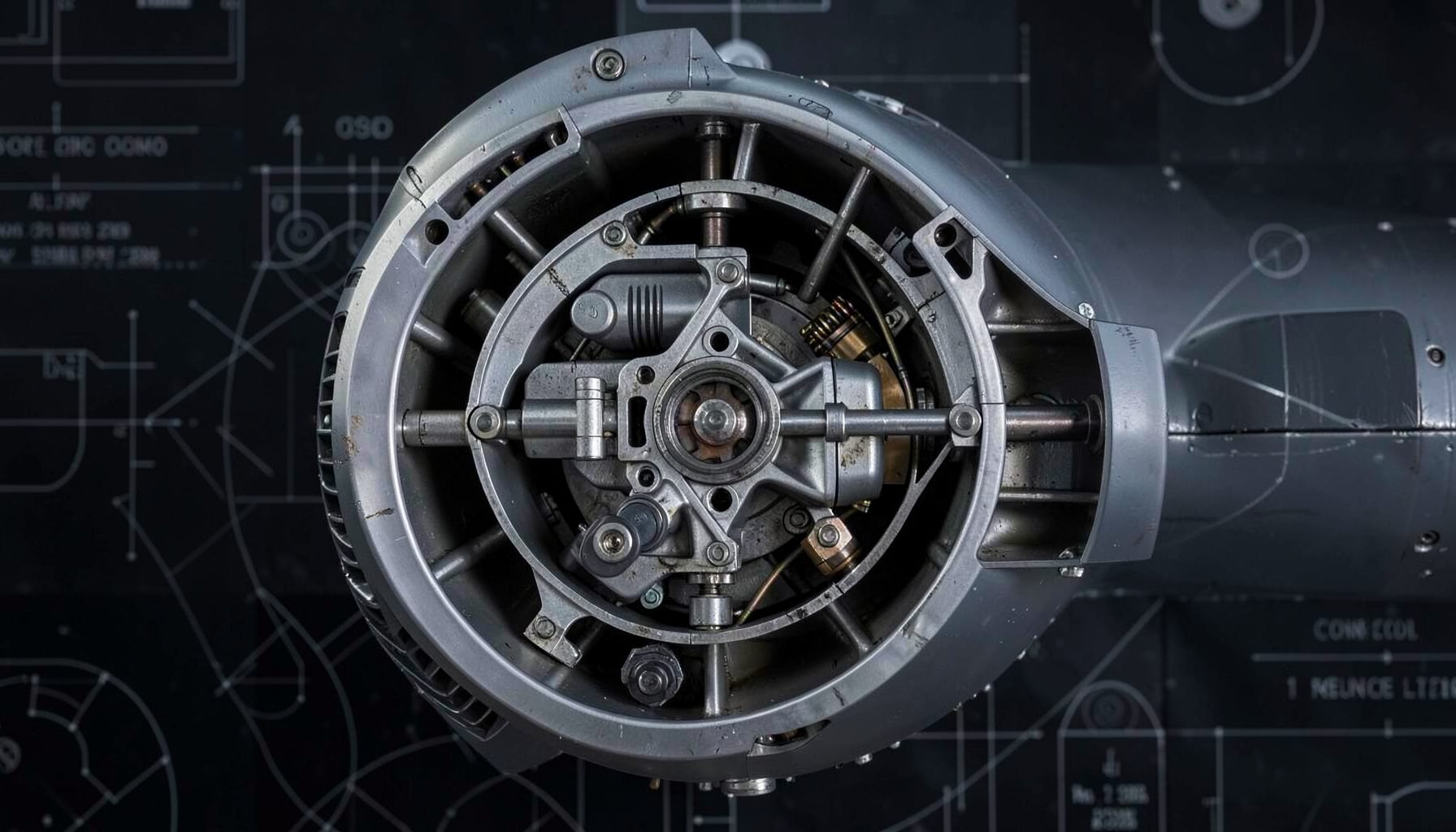
An aircraft engine gearbox casing is more than a protective enclosure. It supports bearings, carries gear loads, controls lubricant flow and forms part of the main vibration path from the gear train to the surrounding air. Variations in casing stiffness can therefore alter both structure-borne vibration and the sound radiated from the housing. Reinforcing ribs are especially useful because they increase stiffness and strength without requiring a complete increase in wall thickness.
The role of a gearbox casing ribbing pattern in reducing radiated noise and vibration lies in how it changes the casing’s dynamic behaviour. Ribs divide large panels, redirect loads and alter structural modes. When correctly placed, they can prevent a casing wall from resonating strongly at a gear-mesh or shaft-order frequency, reducing vibration acceleration, sound pressure and the likelihood of fatigue damage.
This is not simply a matter of adding more metal. Rib depth, spacing, symmetry, continuity and connection to adjacent walls all influence the result. The approach described by the OPTIMIZE research programme combines design of experiments, simulation, tolerance analysis and physical testing to identify rib arrangements that improve acoustic performance while preserving strength, weight and power density.
Why Casing Ribbing Alters the Acoustic Path
Noise generated inside a gearbox reaches the external environment through several paths. Gear impacts excite the housing, bearings transfer forces into the casing, and the casing panels then radiate sound into the surrounding air. The structural properties of those panels determine how efficiently this vibration becomes airborne noise. A panel with a strong resonance at an excitation frequency can produce much greater sound pressure than the same panel away from resonance.
A suitable rib arrangement interrupts that response. Transverse ribs increase local bending stiffness, while longitudinal and circumferential ribs distribute forces into stronger casing regions. Closely spaced ribs can reduce the unsupported span of a thin wall, lower panel flexibility and divide a broad vibration pattern into smaller, less coherent regions. This segmentation can also reduce the acoustic efficiency of the radiating surface.
The benefit depends on the frequency relationship between the excitation and the casing modes. Moving a structural mode away from a dominant gear-mesh harmonic may reduce response, while a rib pattern that concentrates energy near an accessory mount or wall junction may create a new vibration path. Consequently, casing reinforcement must be evaluated as part of the complete gearbox structure rather than as an isolated cosmetic feature.
Rib Layout, Excitation and Structural Modes
Circumferential ribs are commonly associated with pressure vessels and cylindrical housings, but aircraft gearbox casings may use axial, radial, diagonal or locally reinforced arrangements. The appropriate pattern depends on the casing geometry, bearing supports, internal components and available installation space. Symmetrical layouts can help balance structural response and minimise sensitivity to manufacturing variation, while non-uniform patterns may be needed around ports, oil galleries, sensors or removable housings.
The critical comparison is between rib-induced modes and the operating excitation spectrum. Gear-mesh frequency, rotor or shaft orders, bearing-related frequencies and broadband contact forces all contribute. A casing should avoid strong coincidence between these excitations and its principal mode shapes at relevant operating conditions. This does not mean eliminating every resonance; rather, the design should keep the largest panels from acting as efficient acoustic radiators at the frequencies that dominate the measured spectrum.
Damping can supplement the geometric work of the ribs. Constrained-layer treatments, viscoelastic materials and suitable surface coatings may reduce resonance peaks, although they must remain stable under the high temperatures, oils and vibration levels found in an aircraft powerplant. Rib roots also need smooth fillets because abrupt changes in section create fatigue stress concentrations. The best pattern balances acoustic improvement with manufacturability, inspection access and reliable long-term structural performance.
High-Speed Loads and Manufacturing Variation
A geared aircraft engine operates under conditions that can make small housing deformations consequential. In a hyperstatic arrangement, several bearings and tightly meshed gears share loads. Changes in casing stiffness caused by ribbing can alter reaction forces, bearing preload and tooth loading. Although this interaction may be secondary to the noise objective, it must be included in structural and fatigue analysis to avoid solving an acoustic problem at the expense of gearbox life.
Manufacturing variation can shift the final result. Cast ribs may differ in root radius, waviness and wall thickness, while machined features can introduce residual stress. Additive manufacturing offers useful freedom for complex rib layouts, but powder consolidation, surface roughness and post-process distortion require their own acceptance criteria. Tolerance analysis should therefore identify which dimensions most influence modal frequencies, damping, stress and the final radiated-noise level.
A robust rib design also needs allowances for thermal growth, centrifugal loading, lubricant pressure and installation differences between engines. Coastal operations around Brisbane and Perth can expose components to salt-laden air, while northern Australian routes can involve high ambient temperatures and dust. These realities strengthen the case for conservative fatigue margins and for service-level inspections that can detect cracking or distortion. The wider methods are set out in the project documentation.
Design and Verification Factors
A design-of-experiments programme should separate the main ribbing variables before testing their interactions. This helps determine whether a particular improvement comes from the pattern itself or from a secondary change in wall thickness, material, bearing support or fastener preload.
- Excitation definition: Identify dominant gear-mesh, shaft-order and bearing-related frequencies over the intended operating range.
- Rib geometry: Compare rib depth, width, spacing, orientation, root radius and termination details as controlled design factors.
- Symmetry and segmentation: Assess how evenly the pattern divides the casing and whether it creates asymmetric vibration or stress concentrations.
- Interfaces and damping: Examine how ribs connect to flanges and bulkheads and whether supplementary damping remains effective under heat and oil exposure.
Interactions require particular attention. A deeper rib may improve one panel mode while shifting another mode directly onto a dominant excitation. A factorial design can expose these effects more efficiently than changing one feature at a time, while tolerance analysis can show which nominal dimensions must be tightly controlled.
- Dynamic response: Measure or predict modal frequencies, mode shapes, harmonic amplification and acceleration at critical casing locations.
- Structural durability: Check local stress, fatigue life, bearing reactions, seal interfaces and the effect of casing deformation under load.
- Tolerance robustness: Determine whether the acoustic benefit survives realistic variation in material, casting, machining and assembly.
- Outcome measures: Set limits for sound pressure, vibration velocity, structural integrity and mass rather than optimising one metric alone.
Simulation and test records must also remain traceable when several organisations contribute models, instrumentation results and manufacturing data. Shared accounts should use unique credentials and appropriate access controls. The strong password guidance offers practical guidance for protecting those records and reducing the risk of unauthorised changes to engineering evidence.
Evidence from Simulation and Physical Testing
Finite-element modelling can connect the rib pattern to the excitation spectrum. A useful workflow starts with the unloaded casing geometry, identifies relevant modes and then applies representative gear and bearing loads. Harmonic analysis can reveal resonance amplification, while nonlinear contact models may be needed where gear, bearing or seal behaviour changes the load path. Mesh convergence and sensitivity to boundary conditions are essential because a visually convincing mode shape is not sufficient evidence of acoustic improvement.
Physical testing confirms whether the model captures the real structure. An instrumented casing or complete gearbox can be assessed using accelerometers, microphones, order tracking and modal-impact tests. Engineers should compare the same rib layouts under controlled speed, load and temperature conditions, recording both local vibration and radiated sound. Sound-intensity measurements can also help determine whether energy is escaping through the casing walls, access covers, seals or pipe connections.
Optical instrumentation can complement contact sensors, particularly when dense accelerometer coverage would alter the structure. For teams considering laser Doppler vibrometry or related diagnostic methods, Genoptics specialist resources can be reviewed alongside the mechanical test plan. Repeated trials, clearly defined pass criteria and checksums for digital test data then help preserve confidence in the comparison between candidate patterns.
An Australian Route to Quieter Gearboxes
Australia’s aerospace engineering base around Melbourne provides a suitable environment for collaboration between designers, materials specialists, manufacturers and gearbox developers. Brisbane’s maintenance, repair and overhaul activity supports airlines and regional operators serving resource and tourism destinations. These sectors have a direct interest in durable gearboxes that operate reliably in heat and dust while limiting cabin noise, maintenance inspection and component replacement costs.
Perth’s long domestic and international sectors place a premium on vibration control and component endurance. Aircraft operating from coastal airports also require attention to corrosion, while aircraft servicing the interior must meet expectations set through CASA design and airworthiness processes. In this local market, a quieter gearbox is valuable only when it can be certified, manufactured consistently and supported by Australian maintenance capability. That makes traceability and documented test evidence central to commercial adoption.
The next step is to establish a baseline casing, define the dominant excitation frequencies and compare rib patterns through both simulation and controlled testing. To scope a focused investigation, contact the project team through its contact page.