Lightweight CFRP Gearbox Housings Cut Weight and Vibration Transmission
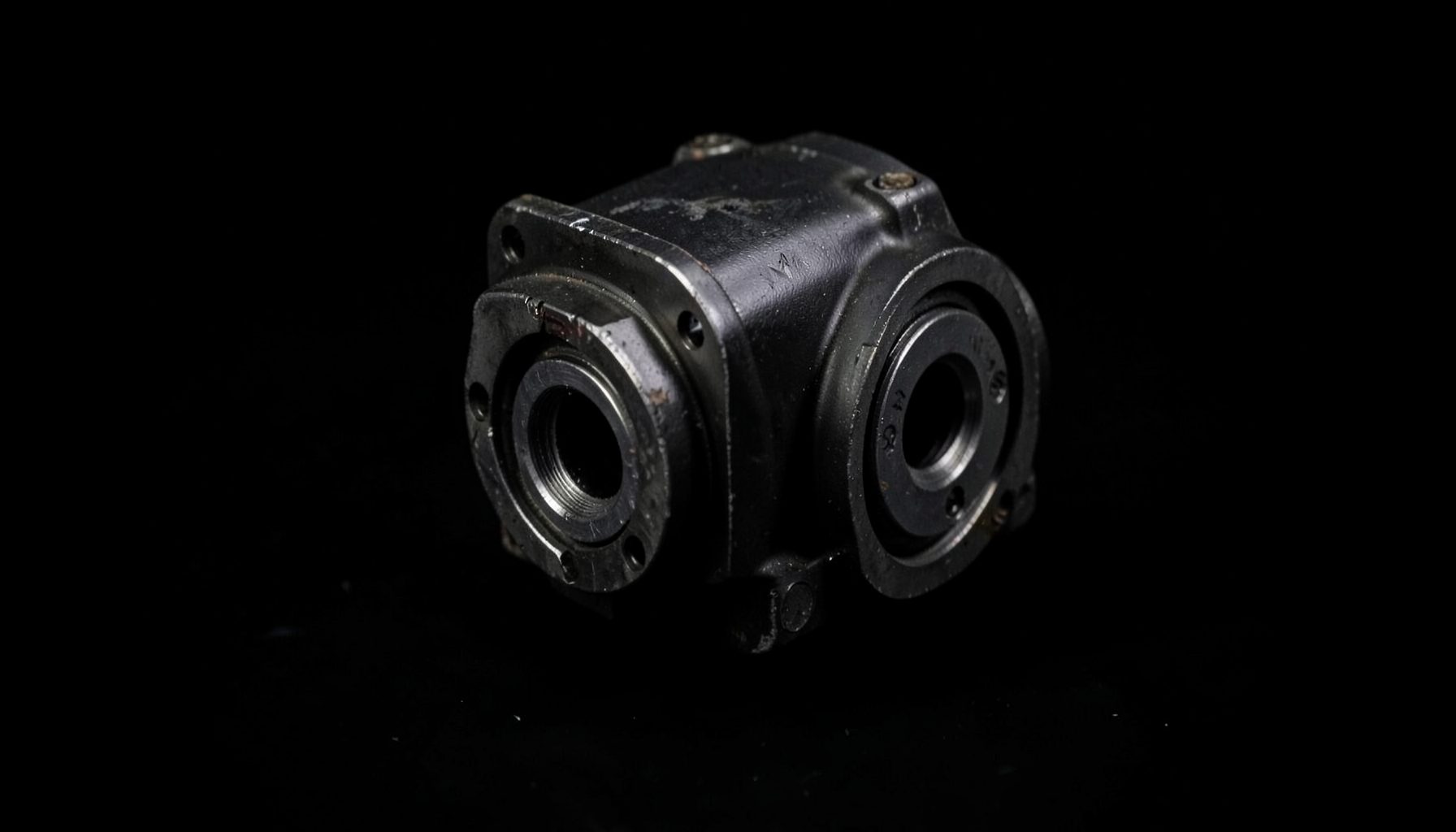
For decades, designers of geared aircraft engines have chased the same two prizes: lighter drivetrains and quieter cabins. Carbon fibre reinforced polymer housings have quietly become one of the more credible routes to both, offering a combination of mass savings and vibration damping that traditional aluminium and magnesium castings struggle to match. As propulsion programmes push for higher power density, the housing around the gears is no longer a simple cover, it is a structural and acoustic component in its own right. The shift in mindset is small in wording but large in consequence, because it changes who owns the housing design and which trade studies get prioritised early in a programme.
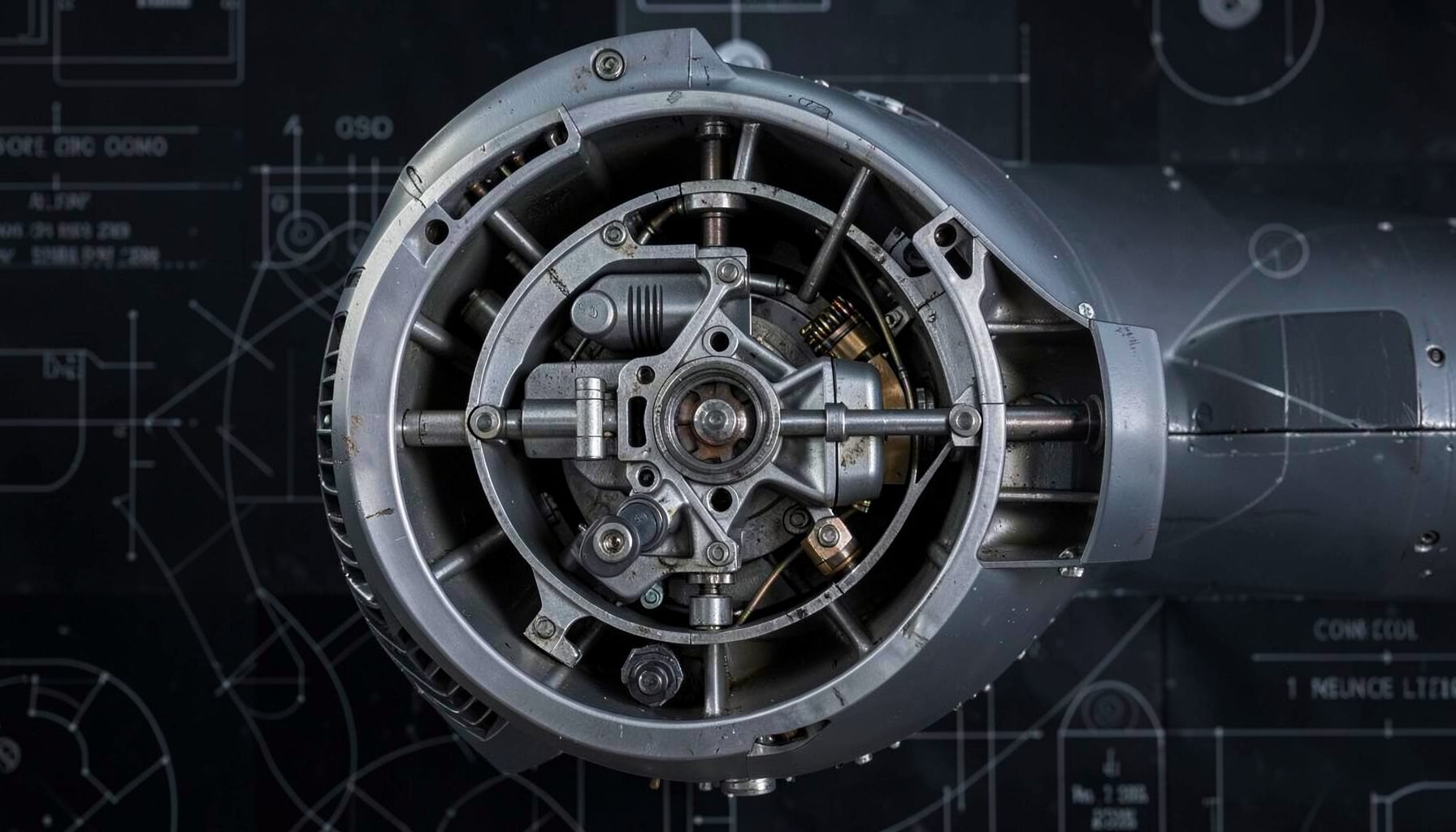
The OPTIMIZE programme explores how experimental design, simulation, and physical testing can unlock these benefits without compromising durability or tolerance control. The project objectives outline a methodology where composite housings, hyperstatic load paths, and manufacturing variation are treated as coupled problems rather than separate design tasks. That framing matters: it allows teams to study the gearbox, its casing, and the surrounding airframe as a single acoustic and structural system instead of a stack of independent components.
Why the housing carries more responsibility than it used to
Modern geared turbofan and turboprop engines operate at shaft speeds that would have been unthinkable a generation ago. As the gears spin faster, the housing has to react higher dynamic loads, contain lubricant spray, resist thermal growth, and contribute as little mass as possible to the airframe. A gearbox casing in a regional turboprop might weigh only a few kilograms, yet those kilograms sit close to the engine's centre of gravity and directly affect fuel burn over a mission. They also influence how the engine mounts interface with the wing or fuselage structure, which in turn shapes fatigue lives and maintenance intervals across the life of the powerplant.
In Australia's regional aviation network, where operators such as Rex and Alliance Airlines fly long sectors between capital cities and remote communities, even a small reduction in transmission mass compounds across thousands of flight hours. Every kilogram shed from a housing translates into useful payload, extra range, or lower maintenance burden. That is why housing material selection has migrated from a procurement decision to an early-stage engineering trade study. Engineers now treat the housing as a primary structural element with its own load cases, rather than a vessel that simply contains the gears. Certification authorities have followed the same logic, demanding more analysis and test evidence on the casing than they did a generation ago.
CFRP versus metallic alloys at a glance
Aluminium housings remain common because they are easy to machine, well understood, and inexpensive at low volumes. Magnesium is lighter still but brings corrosion and fatigue concerns, while titanium offers strength at high temperature but adds cost and machining complexity. Carbon fibre reinforced polymer sits in a different category entirely. Its specific stiffness, the ratio of stiffness to density, can be two to three times that of aluminium when layups are oriented to react the dominant load paths. With careful ply scheduling, designers can build stiffness where it is needed and compliance where it is beneficial, without resorting to thicker sections or extra ribs.
Damping behaviour is where composites really stand apart. The polymer matrix in CFRP dissipates vibrational energy through micro-strain at the fibre-matrix interface, an effect that metallic housings simply cannot replicate without dedicated viscoelastic layers or constrained damping treatments. In practice, this means a CFRP casing can quieten gear mesh excitation before it propagates into the engine mounts and airframe structure. It also allows engineers to tune vibration modes by adjusting ply orientation, something that would require major geometric changes in a metal casting. The flexibility of composite design tools means a housing can be optimised for several targets simultaneously, including mass, first natural frequency, and modal damping across a wide temperature range.
Vibration paths and acoustic transmission
Noise inside an aircraft cabin rarely comes from a single source. Gear meshing frequencies, bearing excitation, aerodynamic sources, and rotor imbalance combine into a complex acoustic field, and the housing acts as a bridge between them. A stiff but lightly damped metal casing will carry gear mesh tones efficiently into the airframe, where they radiate as structure-borne noise into the cabin. A composite housing with tailored damping can interrupt that path before it reaches the airframe, reducing the burden on later isolation stages and lowering the noise load on passengers and crew.
Researchers working on transmission error and gear centre distance variation have shown how small geometric changes can dramatically shift the noise signature of a gearbox. The detailed analysis of transmission error and noise published by the project makes clear that housing compliance is part of the same conversation. When the casing flexes under load, it changes the centre distance between gears, which in turn modulates the transmission error and the excitation it produces. CFRP, with its anisotropic stiffness, can be laid up to control exactly where that flexibility occurs, allowing designers to either stiffen the critical zones or introduce controlled compliance where it benefits the gear mesh and reduces rattle under transient loads.
Australian research, industry, and the composites supply chain
Australia's composites capability is deeper than many outside the country realise. RMIT in Melbourne hosts research groups focused on additive layer manufacturing and has long-running work on fibre-reinforced polymers for aerospace, while the University of New South Wales in Sydney runs one of the region's strongest composites and structures research groups. CSIRO's manufacturing business in Clayton has invested heavily in out-of-autoclave curing and large-scale composite structures, the kind of capability that maps directly onto aerospace gearbox housings. These research clusters feed a workforce that understands both the materials science and the certification pathway required for flight hardware, which is a genuine advantage for local programmes.
The country's broader aviation industry adds another reason to take composite housings seriously. Melbourne's Tullamarine precinct still anchors much of the local MRO activity, Brisbane's aerospace corridor supports both civil and military propulsion work, and Geelong's aviation cluster has begun to attract composite aerostructure suppliers. Australia's vast distances, where a turboprop might fly from Cairns to Broome with limited diversion options, place a premium on systems that are both light and reliable. Lightweight transmission components help regional operators carry more payload or fuel, while quieter cabins improve passenger comfort on long domestic sectors. That makes locally developed composite housings an attractive proposition for both regional and defence applications, particularly where sovereign industrial capability is a procurement goal.
Manufacturing variation and the case for design of experiments
The biggest practical obstacle to CFRP housings is not the material itself but the variability that comes with it. Fibre volume fraction, cure cycle, ply orientation tolerances, and residual stress all drift from part to part in ways that cast aluminium never does. If a programme treats these variables as nuisances to be tolerated, it ends up over-engineering the housing to mask the unknowns. If it treats them as design parameters to be studied, it ends up with a lighter, better-understood component whose behaviour is predictable across the manufacturing window.
This is where design of experiments earns its place. By running structured test matrices on coupons and sub-components, engineers can map how cure temperature, resin flow, and fibre alignment affect stiffness, damping, and dimensional stability. Simulation then extends those findings into full housing geometries, and tolerance analysis quantifies how manufacturing scatter feeds into transmission error and noise. The OPTIMIZE methodology is built around exactly this kind of integration, so that a composite housing is not just built but verified against the real statistical behaviour of the manufacturing process. Hyperstatic conditions inside the gearbox, where multiple bearings constrain the same shaft, make this statistical view even more important, because small dimensional changes cascade through the entire load path rather than being absorbed by local compliance.
Bringing composites into the next generation of geared engines
Adopting a CFRP housing is not a drop-in replacement for an aluminium casting. The load paths inside the gearbox have to be rethought, the bearing arrangements may need to change, and the lubrication system has to cope with a housing that flexes differently under thermal load. Done well, the result is a transmission that is quieter, lighter, and easier to integrate with modern engine health monitoring systems. Done poorly, it introduces modes and resonances that erode every gain the material was supposed to deliver. The difference comes down to whether the engineering team treats the housing as a system element or as a standalone part.
Programmes such as OPTIMIZE exist precisely to bridge that gap. They treat the composite housing as part of a coupled system alongside gears, bearings, lubrication, and the airframe structure that surrounds them. For engineers in Australia and elsewhere who are designing the next generation of geared aircraft engines, that systems view is the most important outcome of all: it turns a promising material into a predictable engineering choice. The same approach also gives programme managers the data they need to certify a composite housing without excessive conservatism, which is often the hidden barrier to adoption in safety-critical programmes.
Read the latest technical updates and watch the project videos to see how the OPTIMIZE team is putting these ideas into practice on real geared engine hardware.