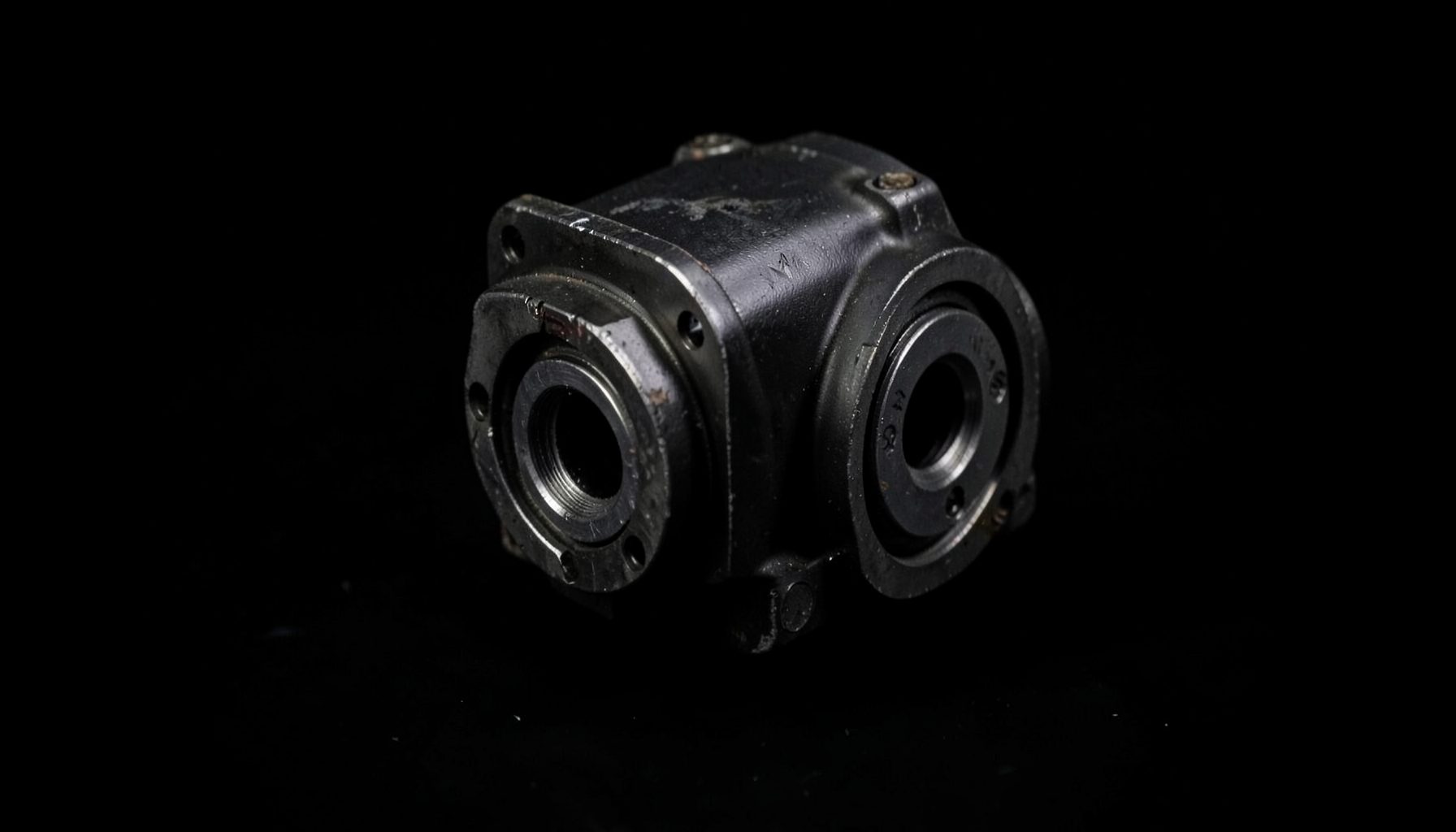
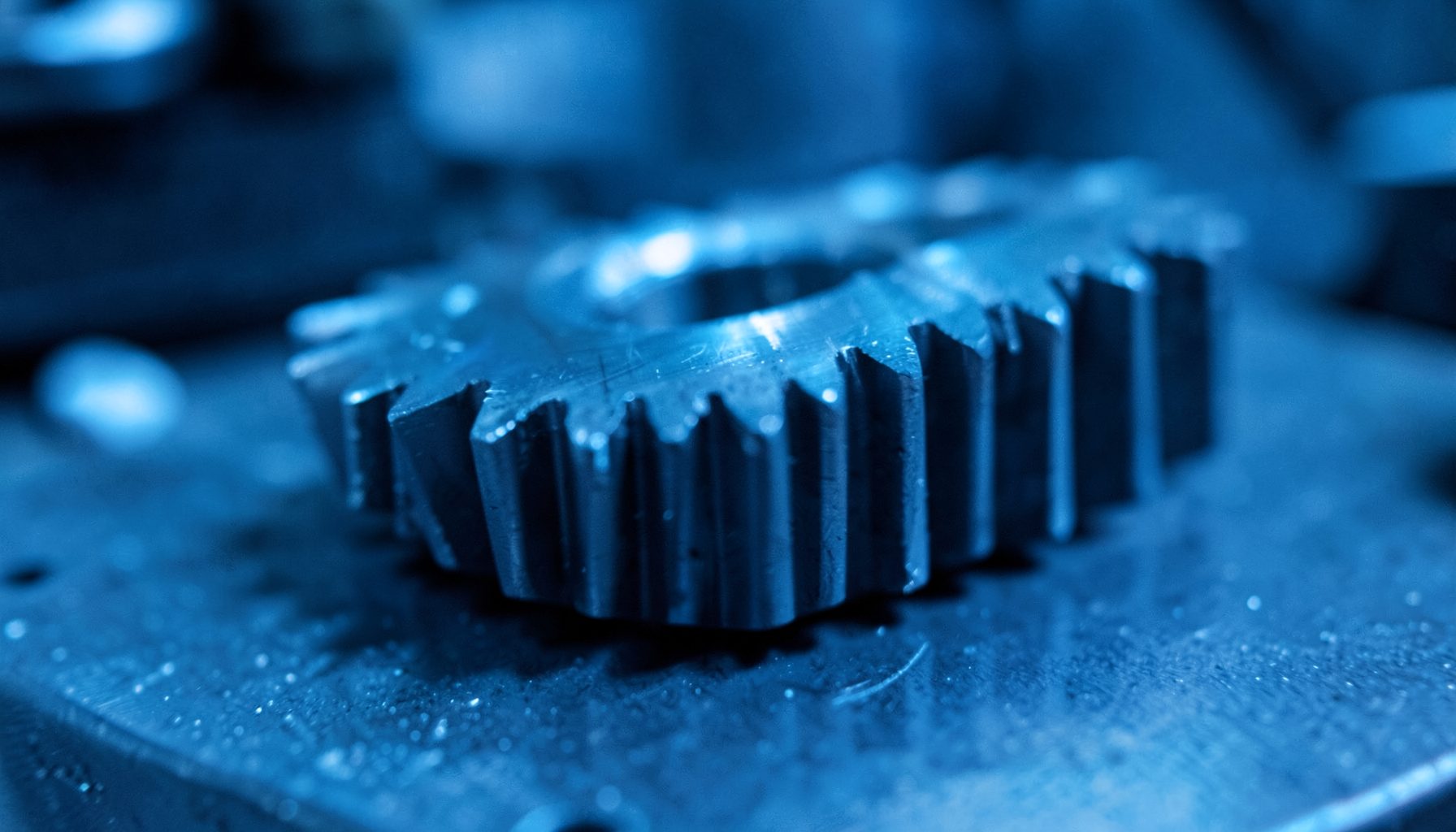
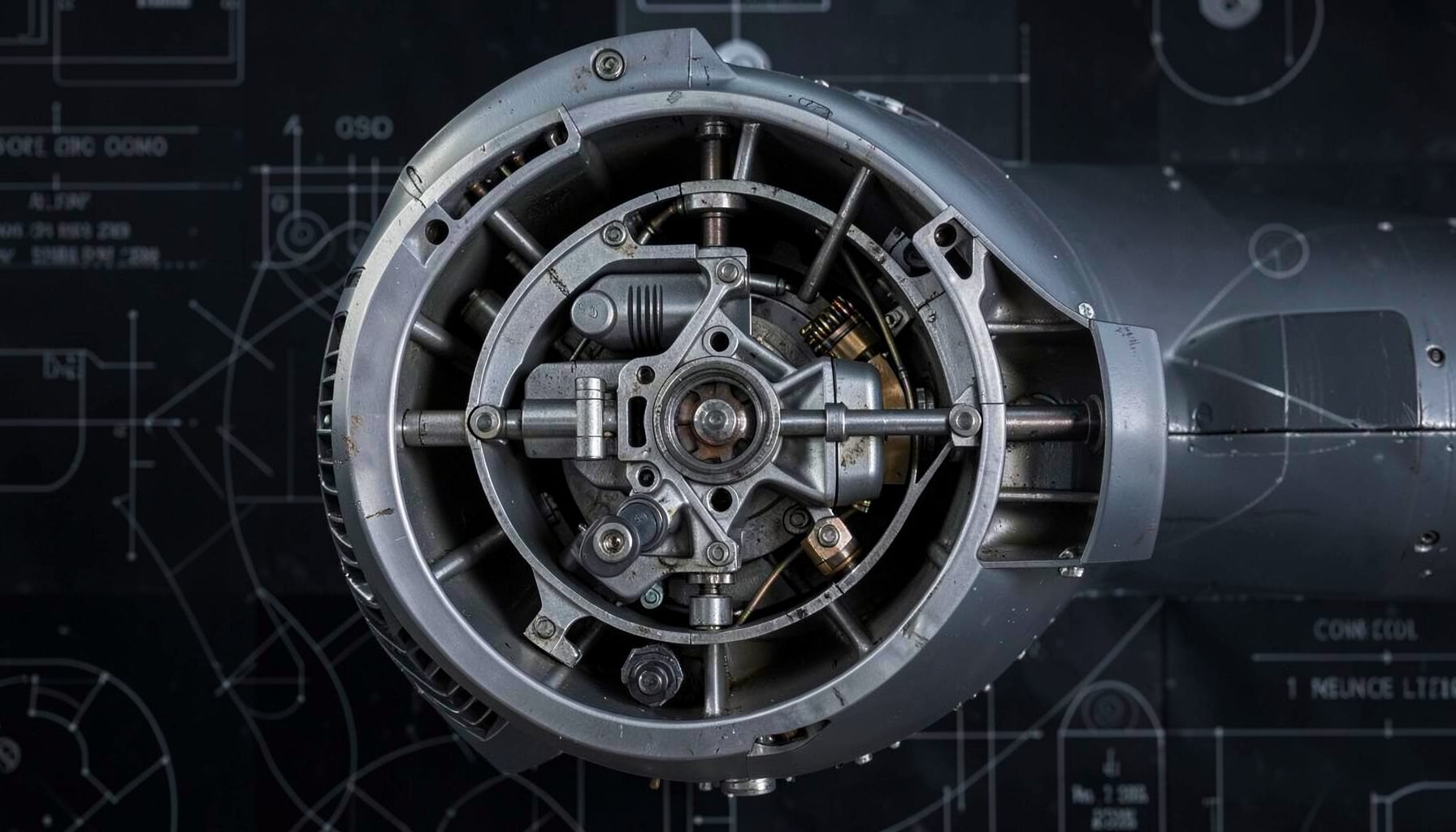
Exploring Material–Geometry Interactions in Gearbox Design
A geared aircraft engine gearbox must transfer substantial power through a compact, lightweight assembly while coping with high rotational speed, fluctuating loads, heat, lubrication demands and manufacturing variation. These requirements are tightly connected. A change in gear geometry can alter contact stress and oil behaviour, while a different material may change stiffness, thermal expansion, durability and the way those loads are distributed.
Design-of-experiments (DOE) methods provide a structured way to study these relationships without testing every possible combination. The OPTIMIZE Project applies research and engineering methods to power-reduction gearboxes for geared aircraft engines, combining simulation, tolerance analysis and physical testing. A diverse DOE is particularly valuable because it can reveal interaction effects that conventional, single-variable studies often miss.
Why interaction effects matter
An interaction occurs when the influence of one design variable depends on the setting of another. For instance, increasing gear face width may reduce nominal contact stress when a steel gear is used, yet produce a different result with a lower-density alloy whose elastic deformation changes the load distribution. The geometry has not acted independently; its effect has been shaped by the material selection.
The same principle applies to tooth modification, shaft diameter, bearing arrangement, housing stiffness and lubricant properties. A small change in lead crowning might improve alignment for a stiff housing but provide little benefit in a more flexible structure. If a DOE varies geometry while holding material constant, engineers may incorrectly attribute the response to geometry alone and overlook the coupled mechanism.
Interaction effects are especially important in geared aircraft engines because the gearbox often operates in a highly constrained environment. Higher speed can increase power density, but it also raises sensitivity to dynamic imbalance, churning losses, tooth flank temperature and lubrication stability. A material that performs well in a low-speed test may behave differently when heat, centrifugal effects and repeated transient loads are included.
The practical consequence is that the best design may not be the best value for each individual factor. A moderate helix angle paired with a carefully selected material and realistic housing stiffness could outperform a more aggressive geometry made from a stronger but heavier material. DOE helps locate these combinations rather than judging factors in isolation.
Build diversity into the experimental design
Diversity in a DOE means deliberately covering a meaningful range of design choices, material states and operating conditions. It does not mean selecting random combinations without engineering logic. Each factor needs a defensible range based on manufacturing capability, safety margins, available materials, lubrication limits and the intended aircraft duty cycle.
Continuous variables might include module, face width, pressure angle, helix angle, tooth crowning, shaft diameter, gear ratio and housing thickness. Discrete variables could include carburised steel, nitrided steel, powder-metal options, titanium components or advanced surface treatments where their use is technically appropriate. Environmental factors may include oil temperature, speed, torque, duty-cycle profile and alignment error.
A space-filling design can be useful at the early stage because it spreads simulations across the design region rather than concentrating them around a narrow nominal point. Latin hypercube sampling, optimal designs and other computer-experiment methods can provide broad coverage with fewer runs than a full factorial study. Later, a response-surface design can focus on promising areas and estimate curvature more efficiently.
Australian operating conditions make this breadth particularly relevant. Aircraft and test equipment may encounter hot conditions around Darwin or Perth, while cold starts and rapid weather changes affect operations in southern regions. Long domestic routes between Sydney, Melbourne, Brisbane and remote destinations can create duty cycles that differ from a short laboratory test. A DOE that includes thermal and load variation is more credible than one based on a single mild operating point.
The design matrix should also include nuisance factors that cannot be controlled perfectly in production. Tooth spacing error, surface roughness, heat-treatment scatter, bearing clearance and assembly misalignment may be represented as noise variables or tolerance distributions. This allows the analysis to distinguish a design that performs well only at its nominal dimensions from one that remains robust after manufacturing variation.
Represent materials as engineering systems
Material should be treated as a group of linked properties rather than a label in a spreadsheet. Elastic modulus, density, yield strength, fatigue strength, fracture toughness, thermal conductivity, coefficient of expansion and surface hardness can all influence gearbox performance. Heat-treatment condition, case depth, residual stress and cleanliness may be just as important as the nominal grade.
For gears, surface durability and bending fatigue usually require separate attention. A hard case can resist pitting and scuffing, while the core must absorb impact and support the tooth. If a material factor in a DOE is represented only by ultimate tensile strength, the model may miss the effects of hardness gradients, residual stress or temperature-dependent fatigue behaviour.
Geometry changes can modify the way these properties matter. A thinner tooth may benefit from a high-strength material, but its greater flexibility could increase deflection and edge loading. A larger gear may reduce tooth stress while increasing mass and polar inertia. A lightweight alloy may help power density but require a coating, insert or altered lubrication strategy to address wear. These are material–geometry interactions, not separate optimisation tasks.
Material data should therefore be entered with traceable uncertainty. Test data from coupons, gear specimens and component-level rigs can be assigned distributions rather than single values. Where data are limited, engineers can use conservative bounds and identify which assumptions most affect the predicted response. This is valuable for aerospace development, where evidence must support design decisions and applicable CASA requirements and airworthiness standards must be considered.
The local supply chain also matters. Australia has strong research and advanced-manufacturing capability in centres such as Melbourne, Adelaide and Sydney, but production-scale access to specialist forgings, heat treatment and aerospace-qualified coatings may involve overseas suppliers. A DOE can include manufacturability or supply risk as a response, preventing a theoretically excellent material from becoming the preferred option when qualification, lead time or repair arrangements are impractical.
Analyse coupled responses and uncertainty
A useful DOE measures several responses at once. Typical gearbox responses include transmission efficiency, power loss, tooth-root stress, contact pressure, bearing temperature, vibration, mass, noise, durability and power density. A design with low weight but excessive temperature is not a successful solution, and one with high efficiency but poor tolerance sensitivity may be unsuitable for production.
Analysis of variance can identify the strongest main effects and interaction terms, while regression or surrogate models can estimate responses across the design space. Interaction plots are particularly informative: non-parallel lines indicate that the impact of one factor changes as another factor moves. Contour plots and response surfaces can then show where material and geometry combinations produce acceptable trade-offs.
Simulation should be linked to physical evidence. Finite-element models can estimate tooth deformation, housing flexibility and stress fields, while computational fluid dynamics or specialised oil-flow models can investigate churning and lubrication behaviour. Multi-body dynamics may capture gear mesh forces and transient effects. Physical tests remain essential for checking friction, thermal response, vibration and damage mechanisms that are difficult to represent fully in a model.
Tolerance analysis adds another layer. Instead of asking whether a nominal gearbox meets its target, engineers can estimate the probability that a manufactured and assembled gearbox will meet efficiency, noise and durability limits. Monte Carlo methods can propagate variation in tooth thickness, runout, bearing clearance, surface finish, material properties and alignment. A diverse DOE helps identify which combinations are especially sensitive to these variations.
The OPTIMIZE members area provides a useful context for following project information, videos and methodology as research moves between modelling and test activity. That connection between digital analysis and experimental evidence is central to responsible gearbox development: a statistical pattern should be investigated as a physical mechanism, not accepted simply because it appears in a fitted equation.
Turn DOE results into robust design decisions
The final aim is not to produce a large collection of plots. It is to select a design that balances efficiency, durability, weight, cost, manufacturability and confidence. Multi-objective optimisation can identify a Pareto front, showing combinations where improving one response would worsen another. Engineers can then choose a point based on the aircraft mission and certification strategy rather than relying on a single mathematical score.
Robust optimisation is especially useful when interaction effects are strong. The selected design should perform acceptably across realistic material properties, dimensions, temperatures, torque levels and assembly conditions. A slightly heavier gearbox may be preferable if it is substantially less sensitive to tooth alignment or lubricant temperature. Similarly, a geometry with a wider process window can be more valuable than one that delivers exceptional performance only under tightly controlled laboratory conditions.
Visualisation helps communicate these choices across disciplines. Designers can see how tooth modifications affect stress; materials specialists can assess whether a proposed grade has enough fatigue and thermal margin; manufacturing engineers can review achievable tolerances; and test teams can identify the most revealing experiments. Clear plots of main effects, interaction effects and uncertainty ranges make the reasoning easier to audit.
Australian aerospace projects also need to consider maintenance and operating practicality. Aircraft serving regional communities or remote areas may spend more time away from major overhaul facilities, making inspection access, lubricant handling and replacement-part availability important design considerations. Components that tolerate ordinary service variation and remain diagnosable through vibration or oil monitoring can reduce operational disruption.
A mature workflow uses DOE in stages. Screening identifies the variables that genuinely influence performance. A richer design then estimates interactions and nonlinear behaviour. Verification tests challenge the model near predicted limits, while tolerance studies assess production readiness. Results from each stage refine the next experiment, reducing wasted analysis and improving confidence in the final gearbox architecture.
A diverse DOE turns material selection and geometry definition into a connected engineering investigation. By covering meaningful alternatives, modelling uncertainty and validating relationships through physical testing, it can expose design opportunities that a narrow study would hide. For geared aircraft engines, that broader view supports gearboxes with better efficiency, durability, power density and resistance to real-world variation.
Explore the OPTIMIZE Project’s research, project media and engineering approach to see how DOE, simulation and testing can support the next generation of aircraft gearbox design. Share the findings with design, materials, manufacturing and test teams so that interaction effects become part of the decision process from the earliest concept work.